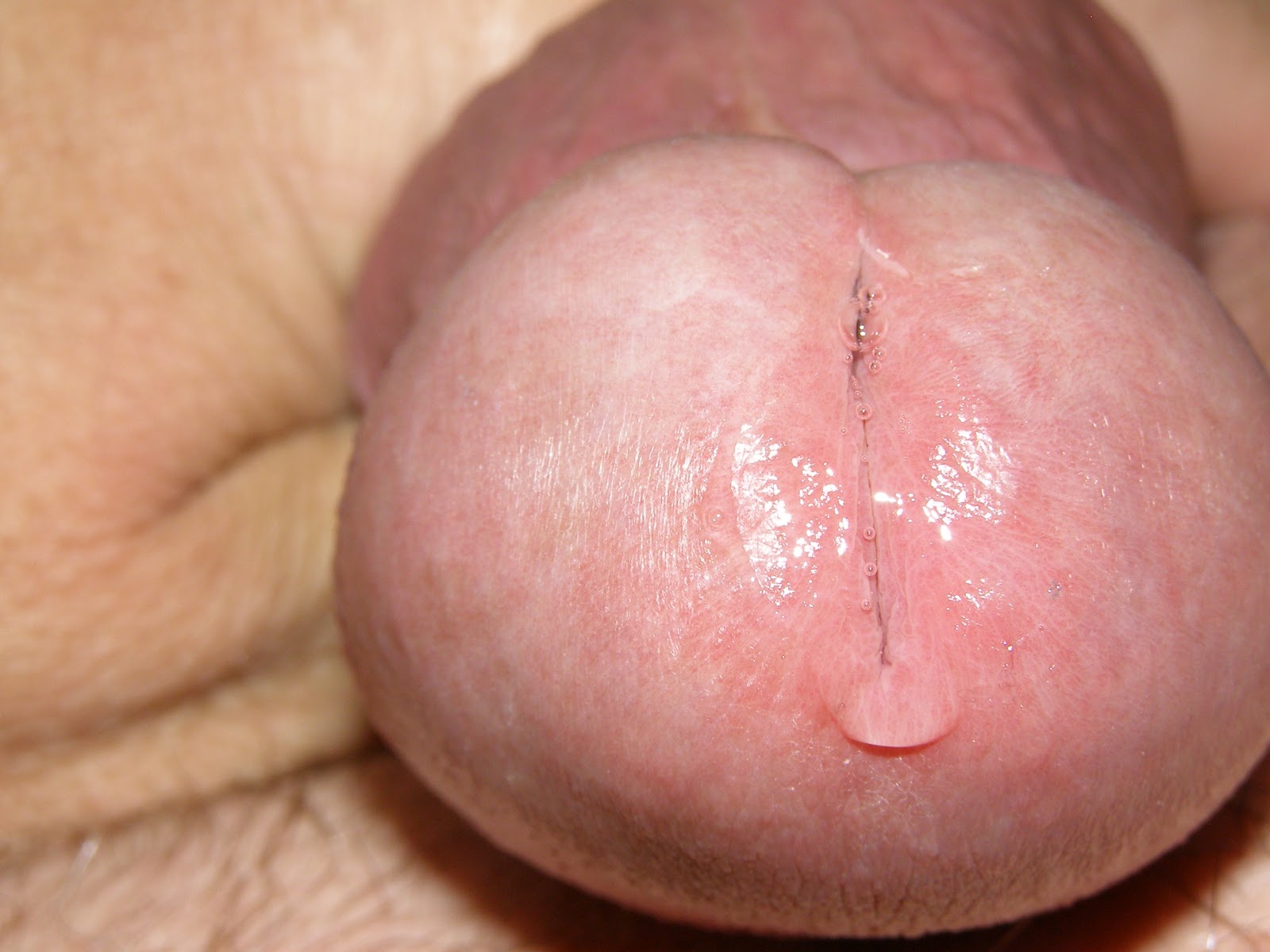
Pre-cum
Status:
Pr-ejaculate also known as pre-ejaculatory fluid, preseminal fluid, or Cowper's fluid, and colloquially as pre-cum is the clear, colorless, viscous fluid that emits from the urethra of a man's penis when he is sexually aroused. It is similar in composition to semen, but has some significant chemical differences. The presence of sperm in the fluid is debated. Existing research has found none or low levels of sperm in pre-ejaculate, though these existing studies are non-generalizable due to examining small numbers of men. A contrary, yet non-generalizable study found mixed evidence, and individual cases of a high sperm concentration have been recently published. Pre-ejaculate is believed to function as a lubricant and an acid neutralizer. The amount of pre-ejaculate emitted varies widely between individual men. There are some rare cases where men do not pre-ejaculate.
Tuesday, March 20, 2012
Saturday, March 17, 2012
Masturbation through itself
Masturbation
Status:
Masturbation refers to the sexual stimulation of a person's genitals, usually to the point of orgasm. The stimulation can be performed manually, by use of objects or tools, or by some combination of these methods. Masturbation is a common form of auto eroticism, providing sexual pleasure or orgasm in the absence of a partner. The act, when performed with a partner, is called mutual masturbation and is sometimes used as an alternative to sexual intercourse.
Friday, March 16, 2012
Nudity on Beach
Nudity on beach
Status:
Naturism or nudism is a cultural and political movement practicing, advocating and defending social nudity in private and in public. It may also refer to a lifestyle based on personal, family and/or social nudism.
Images;
Status:
Naturism or nudism is a cultural and political movement practicing, advocating and defending social nudity in private and in public. It may also refer to a lifestyle based on personal, family and/or social nudism.
Images;
Thursday, March 15, 2012
Premature Squirting
Premature Squirting
Definition:
Female ejaculation also known as gushing or squirting refers to the expulsion of noticeable amounts of clear fluid by human females from the para urethral duct through and around the urethra during or before an orgasm. The exact source and nature of the fluid continues to be a topic of debate among medical professionals and is related to doubts over the existence of the G.Spot.
Report:
In questionnaire surveys, 35–50% of women report that they have at some time experienced the gushing of fluid during orgasm. Other studies find anywhere from 10–69%, depending on the definitions and methods used. For instance Krakatoa (1994) surveyed 200 women and found that 6% reported ejaculating, an additional 13% had some experience and about 60% reported release of fluid without actual gushing. Reports on the volume of fluid expelled vary considerably from amounts that would be imperceptible to a woman, to mean values of 1–5 ml, although volumes as high as one pint (473 ml) have been reported.
Source of Fluid:
One very practical objection relates to the reported volumes ejaculated since this fluid must be stored somewhere in the pelvis, of which the urinary bladder is the largest source. The actual volume of the para-urethral tissue is quite small. By comparison, male ejaculate varies from 0.2–6.6 ml (0.04–1.3 tsp) (95% confidence interval), with a maximum of 13 ml (2.6 tsp). Therefore claims of larger amounts of ejaculate are likely to contain at least some amount of urine. The eleven specimens analyzed by Goldberg in 1983, ranged from 3–15 ml (0.6–3.0 tsp). One source states that Skene's glands are capable of excreting 30–50 ml (6–10 tsp) in 30–50 seconds, but it is unclear how this was measured and has not been confirmed. One approach is to use a chemical like methylene blue so that any urinary component can be detected.
Function:
The physiological function of the purported liquid is unknown. A 2009 paper in Medical Hypotheses suggests that it may have an anti-microbial function, protecting from urinary tract infections.
Research:
Research has attempted to use chemicals that are excreted in the urine so that any urinary contamination can be detected. Further methodological issues include the fact that the composition of the fluid appears to vary with the menstrual cycle, and that the biochemical profile of the para-urethral tissues varies with age. Other issues relate to the sensitivity and specificity of the markers chosen. The key questions are the source of the fluid produced, and its composition. Some relevant findings have been presented in conferences but never published in peer review journals, and many others are in difficult to access resources.
Late 20th Century:
The topic did not receive serious attention again until a review by Josephine Lowndes Sevely and JW Bennett appeared in 1978. This latter paper, which traces the history of the controversies to that point, and a series of three papers in 1981 by Beverly Whipple and colleagues in the Journal of Sex Research, became the focal point of the current debate. Whipple became aware of the phenomenon when studying urinary incontinence, with which it is often confused. As Sevely and Bennett point out, this is "not new knowledge, but a rediscovery of lost awareness that should contribute towards reshaping our view of female sexuality". Nevertheless, the theory advanced by these authors was immediately dismissed by many other authors, such as physiologist Joseph Boleyn, for not being based on rigorous scientific procedures, and psychiatrist Helen Singer Karlan (1983) stated.
''Female ejaculation (as distinct from female urination during orgasm) has never been scientifically substantiated and is highly questionable, to say the least''
Even some radical feminist writers, such as Sheila Jeffrey s (1985) were dismissive, claiming it as a figment of male fantasy:
''There are examples in the sexological literature of men s sexual fantasies about lesbian sexuality. Kraft-Ebing invented a form of ejaculation for women''
Premature Ejaculation
Status:
Premature ejaculation (PE) means coming too quickly, and it's one of the most common sexual problems.In our survey of several thousand British males, approximately 10 per cent of them said that they often or sometimes had this trouble.
Premature ejaculation:
Premature Ejaculation (PE) is a condition in which a man ejaculates earlier than he or his partner would like him to. Premature ejaculation is also known as rapid ejaculation, rapid climax, premature climax, or early ejaculation.Masters and Johnson defines PE as the condition in which a man ejaculates before his sex partner achieves orgasm, in more than fifty percent of their sexual encounters. Other sex researchers have defined premature ejaculation as occurring if the man ejaculates within two minutes of penetration; however, a survey by Alfred Kinsey in the 1950s demonstrated that three quarters of men ejaculate within two minutes of penetration in over half of their sexual encounters. Most men experience premature ejaculation at least once in their lives. Because there is great variability in both how long it takes men to ejaculate and how long both partners want sex to last, researchers have begun to form a quantitative definition of premature ejaculation.
What Causes It?
For many years, sex experts have tended to say that premature ejaculation is caused by early conditioning.In other words, the man's early, rushed (and perhaps furtive) sexual experiences had to be quick so as to avoid detection. The idea is that this conditions him to climax as quickly as possible.
However, our own surveys have found that many men with PE did not have rushed early sexual experiences though others say they did.
It's worth noting that from an evolutionary point of view, it's probable that males who climaxed quickly were more likely to have children. In other words, if you were a caveman who came very fast, you'd stand more chance of impregnating your woman and enlarging your tribe.
Some men seem to be highly triggered right from the start of their sex lives, and we have encountered instances where their fathers were much the same. Therefore, we feel that the tendency to reach orgasm quickly may possibly be inherited rather than learned.
Physical and Environmental Factors:
Psychological factors commonly contribute to premature ejaculation. While men sometimes underestimate the relationship between sexual performance and emotional well-being, premature ejaculation can be caused by temporary depression, stress over financial matters, unrealistic expectations about performance, a history of sexual repression, or an overall lack of confidence. Interpersonal dynamics strongly contribute to sexual function, and premature ejaculation can be caused by a lack of communication between partners, hurt feelings, or unresolved conflicts that interfere with the ability to achieve emotional intimacy. Neurological premature ejaculation can also lead to other forms of sexual dysfunction, or intensify the existing problem, by creating performance anxiety. In a less pathological context, premature ejaculation could also be caused simply by extreme arousal.
Treatment:
When deciding the appropriate treatment, it is important for physician to distinguish PE as a "complaint" versus PE as a "syndrome". About 20 years ago, PE was classified into "lifelong PE" and "acquired PE". Recently, a new classification of PE was proposed based on controlled clinical and epidemiological stopwatch studies, and it included 2 other PE syndromes: "natural variable PE" and "premature-like ejaculatory dysfunction". Only men with lifelong PE with Inter vaginal ejaculation latency time (IELT) <1 to 1.5 minutes should require medication as a first option, along with or without therapy. For men who fall into one of the other categories, treatment should consist of patient reassurance, behavior therapy, and/or psycho education to explain irregular early ejaculation is a normal variation.
Status:
Premature ejaculation (PE) means coming too quickly, and it's one of the most common sexual problems.In our survey of several thousand British males, approximately 10 per cent of them said that they often or sometimes had this trouble.
Premature ejaculation:
Premature Ejaculation (PE) is a condition in which a man ejaculates earlier than he or his partner would like him to. Premature ejaculation is also known as rapid ejaculation, rapid climax, premature climax, or early ejaculation.Masters and Johnson defines PE as the condition in which a man ejaculates before his sex partner achieves orgasm, in more than fifty percent of their sexual encounters. Other sex researchers have defined premature ejaculation as occurring if the man ejaculates within two minutes of penetration; however, a survey by Alfred Kinsey in the 1950s demonstrated that three quarters of men ejaculate within two minutes of penetration in over half of their sexual encounters. Most men experience premature ejaculation at least once in their lives. Because there is great variability in both how long it takes men to ejaculate and how long both partners want sex to last, researchers have begun to form a quantitative definition of premature ejaculation.
What Causes It?
For many years, sex experts have tended to say that premature ejaculation is caused by early conditioning.In other words, the man's early, rushed (and perhaps furtive) sexual experiences had to be quick so as to avoid detection. The idea is that this conditions him to climax as quickly as possible.
However, our own surveys have found that many men with PE did not have rushed early sexual experiences though others say they did.
It's worth noting that from an evolutionary point of view, it's probable that males who climaxed quickly were more likely to have children. In other words, if you were a caveman who came very fast, you'd stand more chance of impregnating your woman and enlarging your tribe.
Some men seem to be highly triggered right from the start of their sex lives, and we have encountered instances where their fathers were much the same. Therefore, we feel that the tendency to reach orgasm quickly may possibly be inherited rather than learned.
Physical and Environmental Factors:
Psychological factors commonly contribute to premature ejaculation. While men sometimes underestimate the relationship between sexual performance and emotional well-being, premature ejaculation can be caused by temporary depression, stress over financial matters, unrealistic expectations about performance, a history of sexual repression, or an overall lack of confidence. Interpersonal dynamics strongly contribute to sexual function, and premature ejaculation can be caused by a lack of communication between partners, hurt feelings, or unresolved conflicts that interfere with the ability to achieve emotional intimacy. Neurological premature ejaculation can also lead to other forms of sexual dysfunction, or intensify the existing problem, by creating performance anxiety. In a less pathological context, premature ejaculation could also be caused simply by extreme arousal.
Treatment:
When deciding the appropriate treatment, it is important for physician to distinguish PE as a "complaint" versus PE as a "syndrome". About 20 years ago, PE was classified into "lifelong PE" and "acquired PE". Recently, a new classification of PE was proposed based on controlled clinical and epidemiological stopwatch studies, and it included 2 other PE syndromes: "natural variable PE" and "premature-like ejaculatory dysfunction". Only men with lifelong PE with Inter vaginal ejaculation latency time (IELT) <1 to 1.5 minutes should require medication as a first option, along with or without therapy. For men who fall into one of the other categories, treatment should consist of patient reassurance, behavior therapy, and/or psycho education to explain irregular early ejaculation is a normal variation.